Tree pruning tools
Introduction
Pruning promotes bushy growth and improves flowering and fruiting. Another advantage is that it allows you to remove the damaged or infected branches and leaves.
Pruning isn’t just about making plants look neat and clean; it’s about keeping them healthy and productive. Removing dead, diseased, or crossing branches allows sunlight and air to reach the inner parts of the plant, which helps in plant growth by reducing fungal infection.
In this blog post, we break it all down for you: what pruning is, the types of tree pruning tools, how to choose the best one for your garden, and how to maintain them.
There are some essential tree pruning tools
Hand pruner
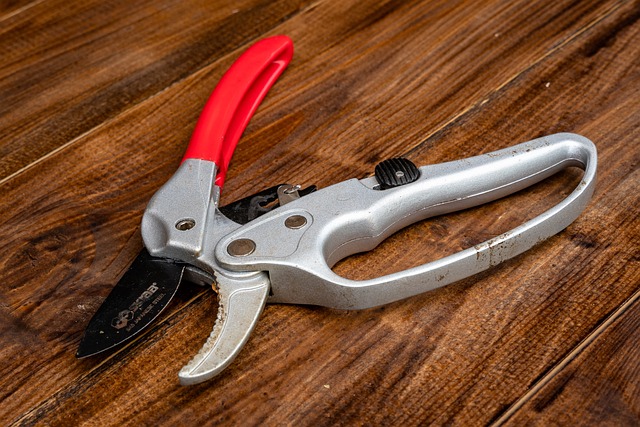
Hand pruners are a small, handheld cutting and trimming tool used to trim and shape plants, also known as pruning shears, secateurs, or garden scissors. Hand pruners are the most commonly used handheld pruning tools for trees in gardening.
It’s best suited for precision cuts on stems and branches of plants, typically up to ¾ inch (about 2 cm) thick. These are mainly two types: first, Anvil pruners, and second, bypass pruners.
Anvil pruners have a single sharp blade that closes down onto a flat metal surface resembling an anvil, which crushes the plant’s branch against it. An anvil refers to a heavy iron block on which hot metals are beaten into shape.
These anvil pruners tend to crush the stem as they cut and are best for woody branches or clearing dead growth that can withstand this type of damage. Use of anvil pruners only on woody or semi-woody branches and not on soft or live stems that can be very easily crushed.
Bypass pruners have a curved scissor-like, sharp blade that passes by a thicker, counter-blade hook. These types of cutters are ideal for cutting younger, softer, and live stems. Bypass pruners make clean, precise cuts that don’t crush plant tissue, allowing for quicker healing and healthier growth. Bypass pruners are also best for making stem cuttings at a 45-degree cutting angle for propagation.
Loppers
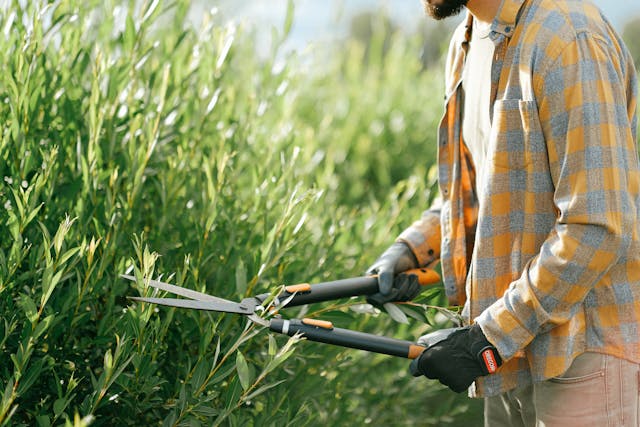
Loppers are long-handled tree pruning tools that provide a little more reach than hand pruners. Loppers have sharp blades with extended handles, typically 18 to 36 inches long, allowing you to reach deeper into shrubs or higher branches where the use of hand pruners is not possible.
Loppers are best suited for medium-duty pruning tasks such as cutting thick stems or branches (1–2 inches or 5 cm in diameter), shaping fruit trees or vines, removing dead or diseased branches, and trimming hard-to-reach areas without the need for a ladder.
There are mainly two types: first, the anvil loppers, and second, the bypass loppers, which are similar to hand pruners with long handles.
Pole pruners
A pole pruner is the best tree pruning tool, consisting of blades attached to hooks, which are mounted on an extendable pole. A chain or cord controls the blades, typically spring-loaded. It is also known as a pole saw. Pole pruners can normally. Pole pruners used for pruning tree branches typically have 12ft or more above the ground, which helps the gardener perform safe, efficient pruning from the ground without the use of a ladder. It is essential for tree care, landscaping, and garden maintenance.
Pole pruners typically have 4 types.
Manual pole pruners, tree pruning tools consist of Bypass blades, anvil blades, or saw blades. They require physical effort and a pulling motion.
Manual pole pruners are best for Light to medium branches (usually up to 1–1.5 inches thick).
Manual pole pruners are Lightweight, noiseless, and require no fuel or electricity.
Corded Electric Pole Pruners have a continuous power supply but are limited by cord length, making them best for small to medium-sized gardens. It is not suitable for remote areas.
Battery (Cordless) Pole Pruners are Portable and quiet, but their battery runtime varies. They are best for pruning of branches that are up to 6–8 feet high.
Gas-Powered Pole Pruners
These have Strong cutting power and are best for thick branches and professional use.
These types of pole pruners are Heavy, noisy, and require fuel mixing and engine maintenance.
Hedge pruners
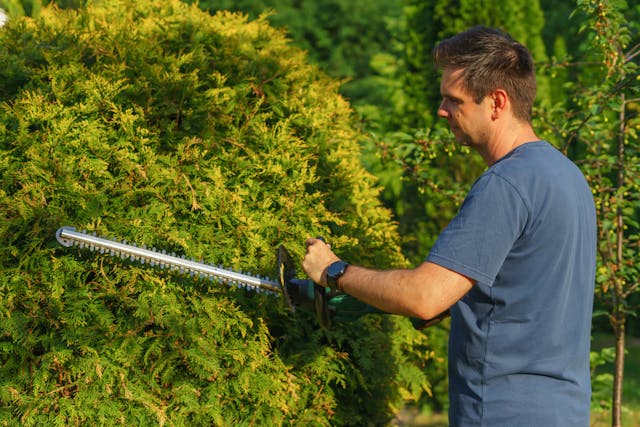
Hedge pruners, also known as hedge shears or hedge trimmers, are the best tree pruning tools designed specifically for shaping, trimming, and maintaining hedges, shrubs, and decorative bushes.
Hedge pruners come in a variety of sizes and designs.
They have long, straight, or angled blades that are sharp enough to cut several branches at one shot. The longer blade of the hedge trimmer ensures clean, even cuts across plant branches to a neat and balanced border.
pruning Saw
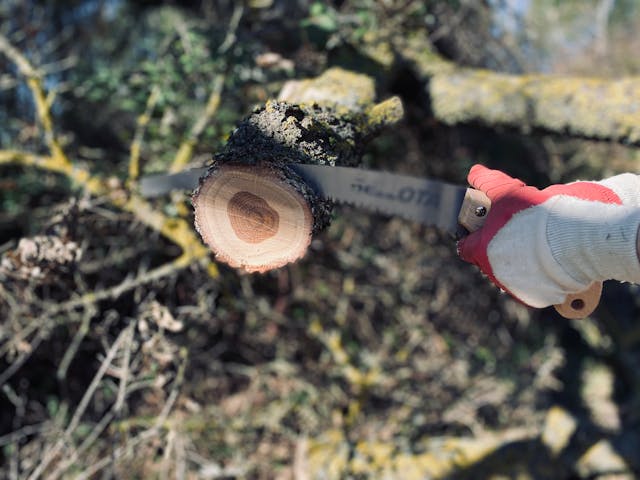
Pruning saws come in a variety of sizes and blades with teeth that are fine, coarse, or even a folding type. A pruning saw comprises a strong, sharp-toothed blade (sometimes curved) with a comfortable handle, making it essential for gardening and tree pruning.
Pruning saws are used for trimming stems or branches of trees that are too thick (more than 1-1.5 inches in diameter) for hand pruners or loppers.
There are many types of pruning saws, such as handheld pruning saws, folding pruning saws, bow saws, pole pruning saws, and those with curved or straight blades.
Flower cutter
A floral snip or flower cutter is a bypass pruner for trimming small branches or flowers. It is lightweight and has a spring system, making it best for performing deadheading. Flower cutters provide the best control, making them ideal for delicate pruning tasks.
A flower cutter is one of the most practical and essential tree pruning tools for trimming flowers, soft stems, and small branches. Many modern flower cutters comprise sharp stainless-steel blades, ergonomic handles, and safety locks that ensure both efficiency and user comfort.
Grass trimmer
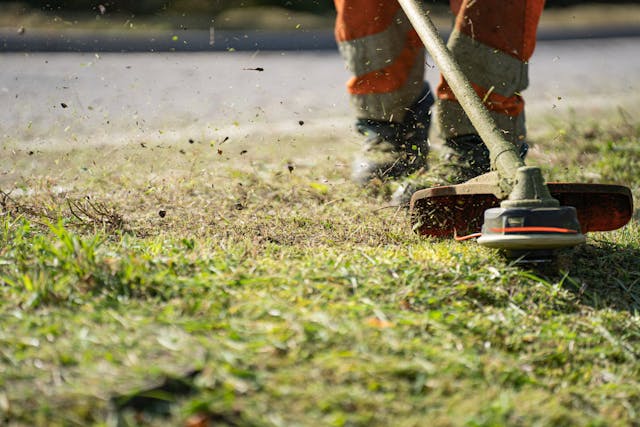
Grass or string trimmers are used for cutting grass, weeds, and light vegetation in the garden. It is best for trimming along sidewalks, walls, trees, and flower beds where lawn mowers cannot reach. Whether there are home gardens or commercial landscapes, a grass trimmer is essential for maintaining the edges and fences of garden borders and tight corners, neat and clean.
There are different types of grass trimmers, i.e., electric, battery-powered (cordless), and petrol-powered.
Garden Scissors
Garden scissors are a small, handheld cutting and trimming tool used to trim and shape herbs, flowers, small tender plants, and harvest vegetables.
Lawn mowers
Manual reel mowers are best suited for Small lawns, are sound-free and eco-friendly, and require low maintenance.
Electric Lawn Mowers (Corded) are best for Small to medium lawns with easy access to electricity. They are Lightweight and sound-free, and require Lower maintenance than gas mowers. Electric lawn mowers are limited by a cord, making them unsuitable for a large lawn.
Battery-Powered (Cordless) Lawn Mowers are best for gardeners who want a balance of convenience and power.
Gas-powered mowers are powerful and reliable. They are ideal for large lawns and thick grass. Gas-powered lawn mowers are Noisy and require fuel and engine maintenance.
A ride-on lawn mower is a type of lawn mower in which the gardener is seated while the mower is in operation, similar to a small tractor. It is Best for a large area (half an acre or more).
Maintenance of pruning tools
Remove dirt and plant debris immediately after pruning of plants and trees. For cleaning, wash blades with warm water and mild soap, and Dry thoroughly to prevent rust.
Always disinfect the trimming tools before and after pruning the plants. Use household disinfectants, or prepare a solution of hydrogen peroxide( 3% or 6%) with water for disinfecting pruning tools.
To make clean cuts, sharpen the cutting edges of pruning tools.
Timely Lubricate the pruning tools by applying oil to pivot points, springs, and joints. After oiling, wipe off excess oil to avoid dust accumulation.
Conclusion
Pruning is one of the most beneficial and essential tasks in gardening. Whether you’re shaping a boundary or fences, removing dead or infected wood, or promoting new blooms, the right pruning tools make all the difference. That’s why choosing the right tool for pruning is essential for plant thriving and growth.